Frisian Wild Goose Challenge Moves Forward with BBENG and Wild van Wild

How can we ensure that geese culled in Fryslân are put to the best possible use? This was the challenge the Province of Fryslân brought to ChallengeBase. Following a search for innovative solutions, a match has now been made! BBENG and Wild van Wild will explore how to develop an economically viable, circular and socially supported value chain for wild geese. The collaboration was officially launched during a match event in Warten.
From challenge to innovation challenge
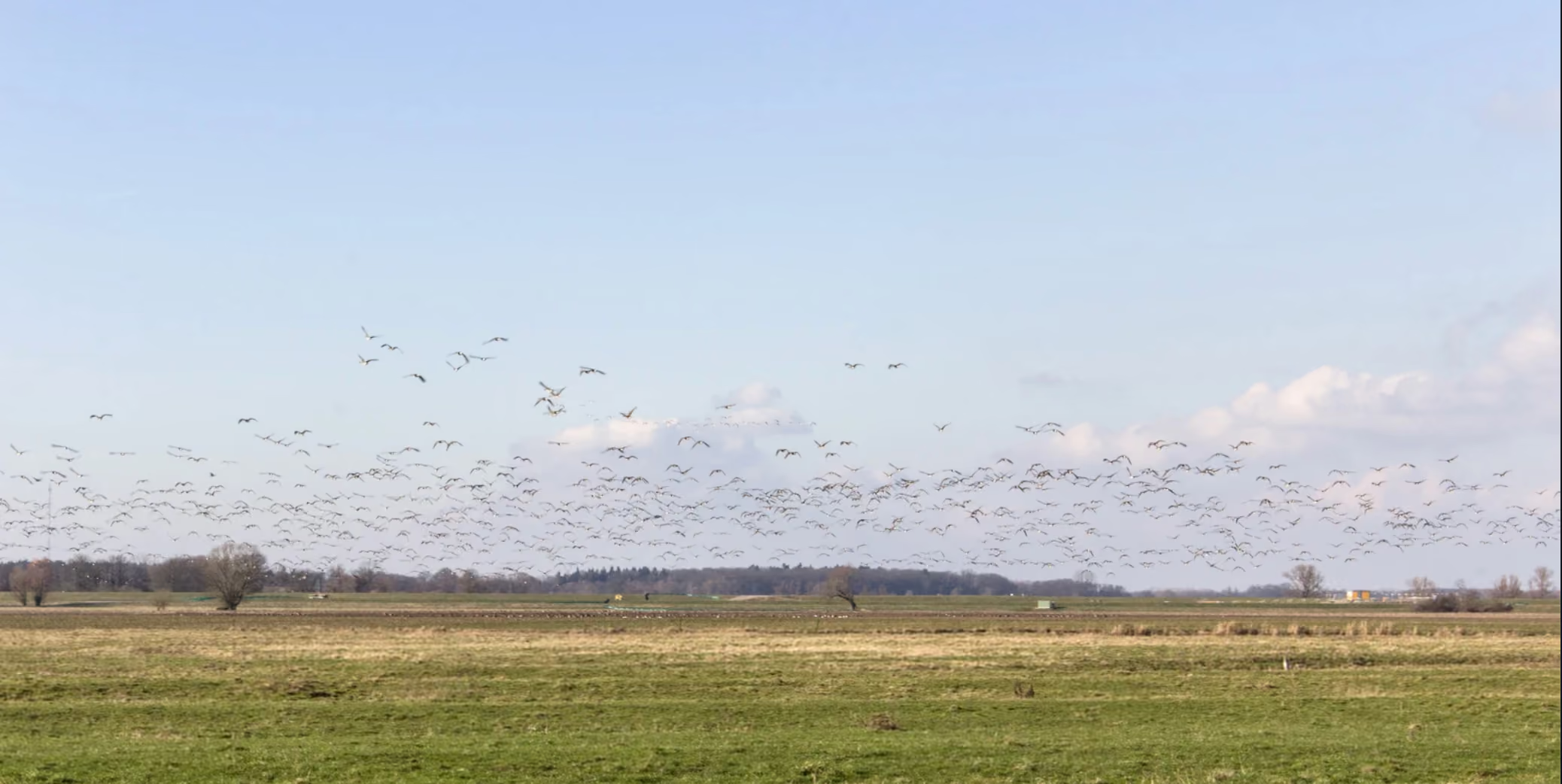
In Fryslân, geese cause damage to agricultural land. To manage populations and reduce damage, culling is part of the current wildlife management approach. The aim is to ensure that geese culled as part of this process are put to the best possible use.
Several initiatives are already working towards this goal. Geese are used for personal consumption, shared within hunters' networks or supplied to local butchers, food trucks and restaurants. Nevertheless, finding a valuable and consistent use for all culled geese remains a challenge.
The number of available geese varies by season and location. In addition, the value chain faces challenges related to collection, refrigeration, transportation, processing and market access.
The Province of Fryslân brought this issue to ChallengeBase. Together, we translated it into an innovation challenge centred around one key question:
How can we make the best possible use of geese culled in Fryslân to create an economically viable, circular and socially supported value chain?
BBENG and Wild van Wild take on the challenge
Through ChallengeBase, we searched for companies and organisations with innovative ideas to address this challenge. From the proposals submitted, BBENG and Wild van Wild were selected as the partners with whom the Province will take the next step.
Their assignment goes beyond simply processing geese. Over the coming period, they will investigate how the entire value chain, from collection and refrigeration to processing, product development and sales, can be organised to create a practical and economically sustainable model.
A match is just the beginning
On 8 October, stakeholders from across the wild goose value chain gathered for a match event in Warten. BBENG and Wild van Wild presented their approach for the next phase and signed a letter of intent together with the Province of Fryslân.
But the event was about more than officially marking the start of the collaboration. Developing a well-functioning value chain requires the knowledge and experience of many different stakeholders.
That is why hunters, wildlife managers, farmers, butchers, meat processors, logistics providers, chefs, hospitality businesses and potential buyers were invited to participate. The event provided plenty of opportunities to exchange experiences and ideas and establish new connections.
BBENG and Wild van Wild can use the insights gathered during the event to help shape the next phase of the project.
Towards a viable solution
Over the coming period, BBENG and Wild van Wild will work towards developing a concrete, evidence-based model. The aim is to determine whether a sustainable value chain for making valuable use of wild geese is feasible and, if so, under what conditions.
At ChallengeBase, we believe that a match is not the end of the journey, but the beginning of working together towards a solution.
That is why ChallengeBase will remain involved after the match, helping the partners move their collaboration forward towards a solution that can be implemented in practice.
Want to learn more or contribute to the wild goose value chain?
Visit the De Gans als Kans website to learn more about the challenge and follow its progress. Entrepreneurs, wildlife managers, processors and other interested parties can also register as potential value chain partners.
Explore the challenge: www.degansalskans.nl
The challenge
Innovation Challenge – From culling to circular supply chains
Are you active in circular supply chains, food processing, or biobased applications? Do you have the knowledge and technology to contribute to a smart, profitable, and socially supported solution for managing the goose population in Fryslân? Would you like to co-create a meaningful solution with the Province — and earn a place in a unique real-world innovation trajectory?
